
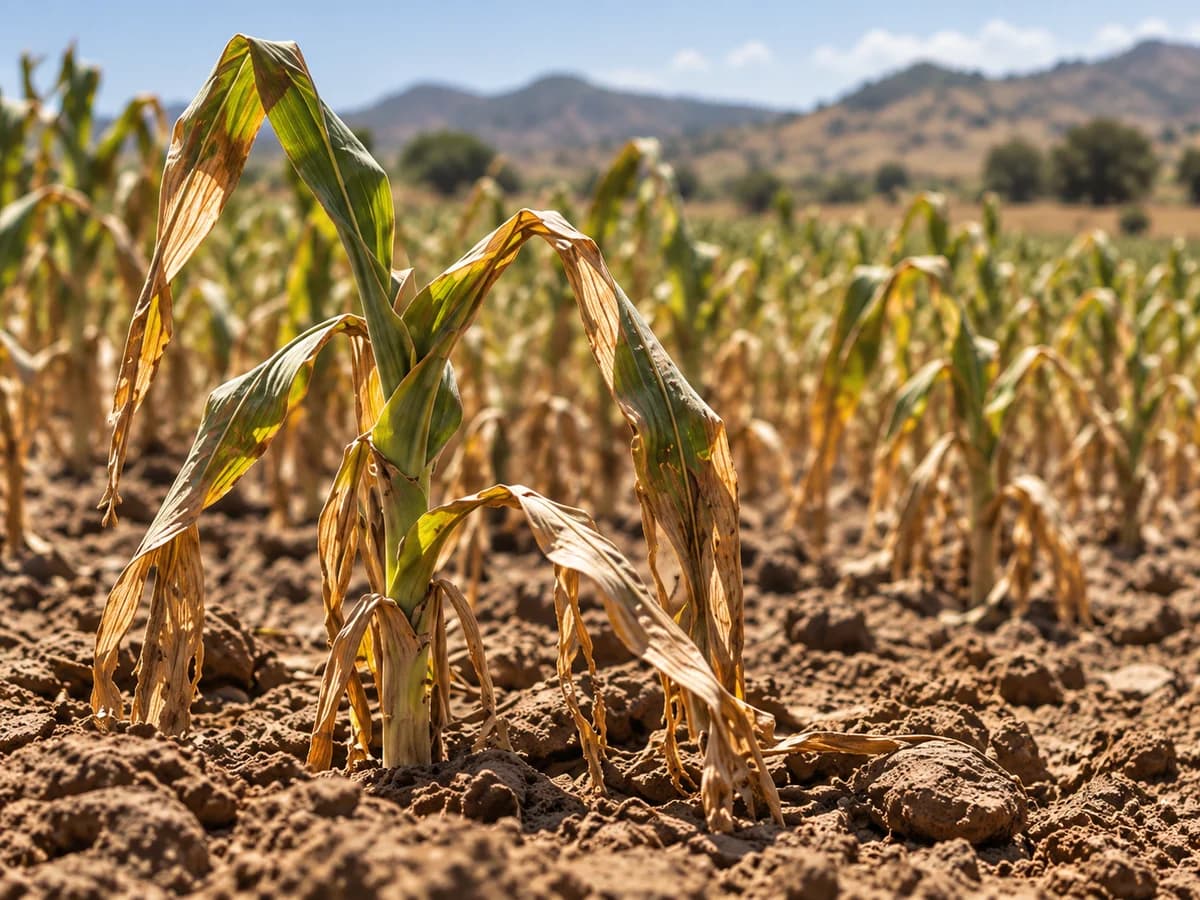
01 / Water
Less reliable water.
Unpredictable rainfall puts harvests at risk. Growing food needs a more resilient water supply.
At Drylands Farms, we produce fresh food close to the market, transforming marginal land into productive farmland that strengthens local food security. Hyper-efficient water recirculation and renewable solar energy let our climate-smart farms run year-round — delivering a high-quality, consistent, affordable supply of nutritious produce.
Unpredictable rainfall puts harvests at risk. Growing food needs a more resilient water supply.
Agriculture already accounts for over 70% of global freshwater withdrawals, and Sub-Saharan Africa is more exposed to the consequences of changing rainfall patterns than any other region on earth. In 2024, Southern Africa experienced its worst drought in a century, affecting 27 million people and forcing five national governments to declare disasters.
These are not aberrations, only two of the last nine crop seasons in the region have seen average rainfall levels. As climate change accelerates, the unpredictability of rainfall will increasingly undermine yields from the rain-fed smallholder farms that the region's food system depends on almost entirely.
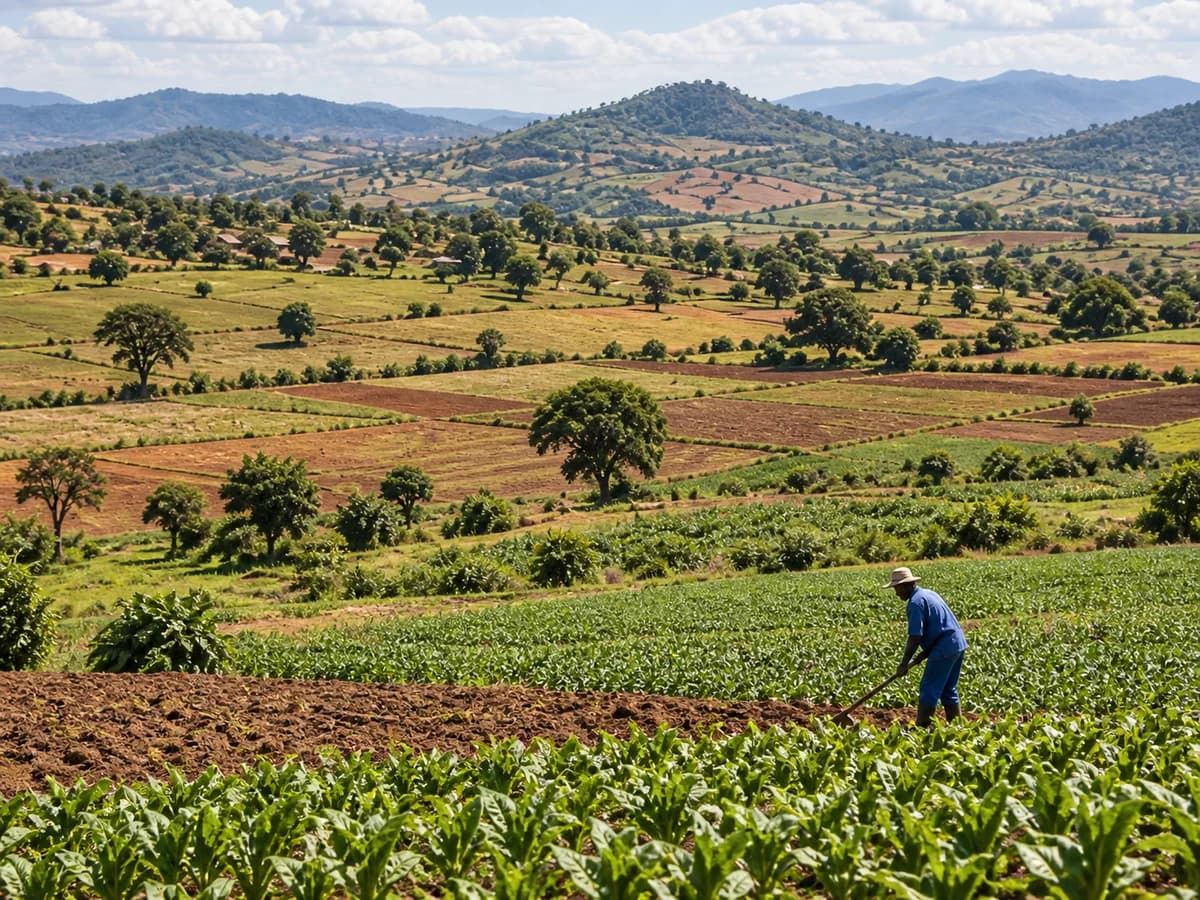
Demand is rising faster than domestic production. Current growing methods face a widening gap.
African agricultural yields have remained roughly half the global average for generations, a gap that shows little sign of closing under current conditions. Despite employing the majority of the working population, agriculture generates just 15% of GDP across the continent, a reflection of how deeply inefficient the dominant model remains.
Archaic farming methods, severe soil degradation from overuse, highly fragmented smallholdings, and a structural focus on low-value staple crops over high-value fresh produce all contribute to a system that is fundamentally misaligned with what a rapidly urbanising population needs to consume. The existing agricultural model cannot close the demand gap — and climate change is making it harder with every passing season.
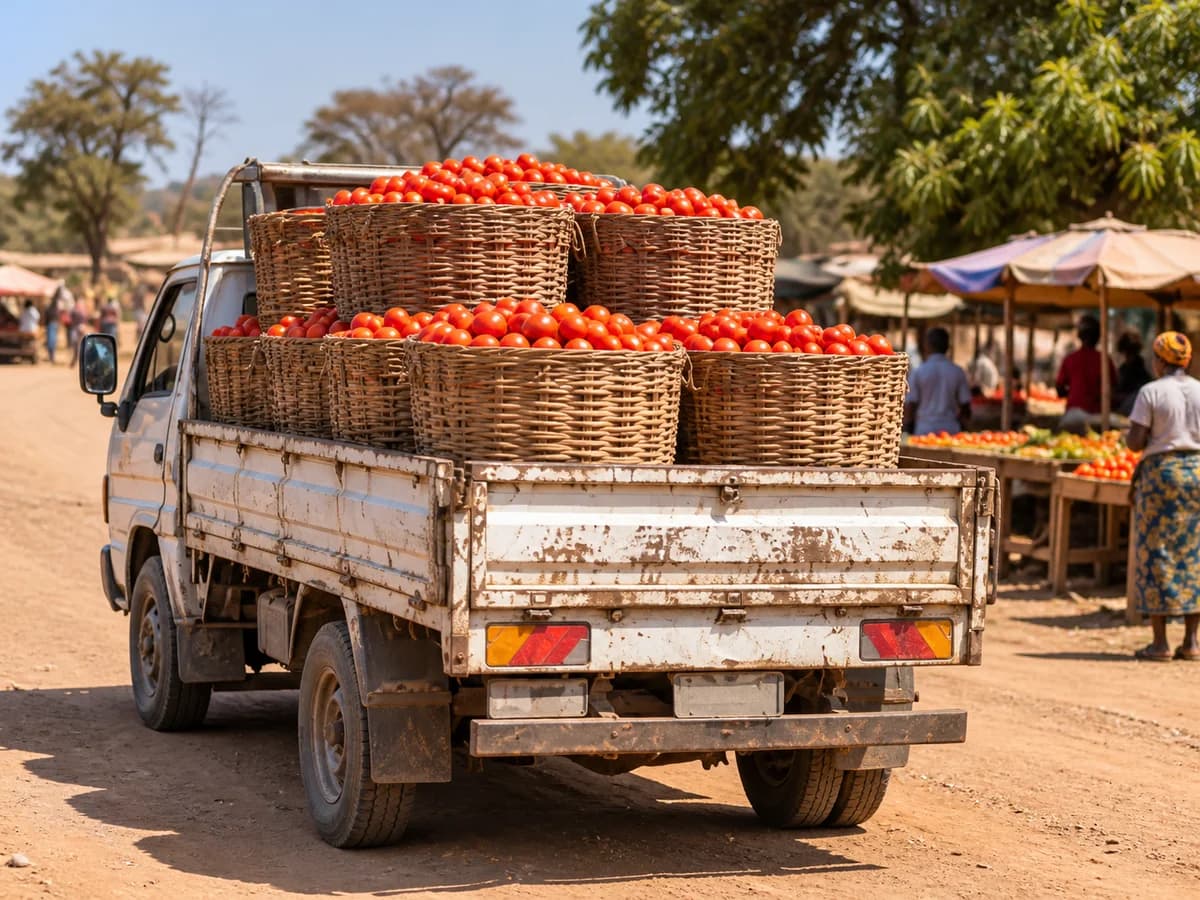
Heat, handling and gaps in cold storage mean too much fresh produce never reaches consumers intact.
Even where produce is successfully grown, it frequently does not reach consumers intact. Fruits and vegetables (the highest-value fresh produce categories) experience post-harvest losses of between 28% and 55% globally, with low- and middle-income countries most affected, with perishables like tomatoes and bananas regularly hitting the upper end of that range due to inadequate cold storage, poor road infrastructure, and unsophisticated supply chains.
The result is a structural "feast or famine" dynamic: seasonal gluts followed by acute shortages, with spoilage absorbing value at every stage of the chain. For Africa's rapidly growing megacities, this translates into persistent shortages of affordable, high-quality fresh produce; a gap that is increasingly filled by expensive imports, at significant cost to both consumers and national trade balances.
Grow more. Use less water. Bring food closer.
In controlled-environment agriculture, light is the primary determinant of yield. Every other growing parameter, temperature, humidity, nutrients, water, can be controlled artificially, but light cannot be manufactured at scale without prohibitive cost.
The amount of natural light available at a given location therefore sets the ceiling for what a greenhouse farm can produce, and we design our farms and operating protocols to make maximum use of the sun for best yields and quality.
Explore how land, climate, water, energy and fulfilment work together.
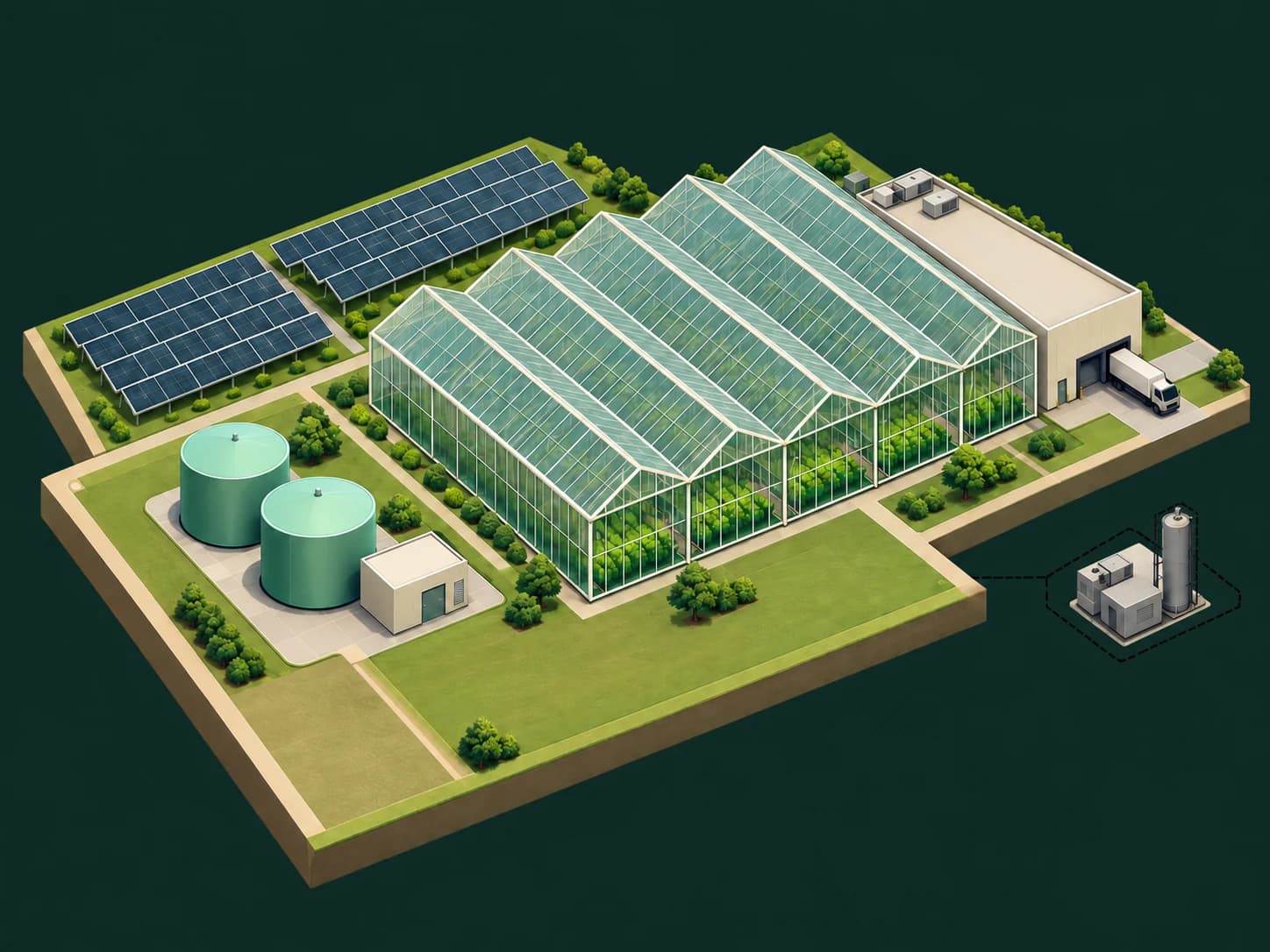
Built on low-value land unsuitable for traditional agriculture.
Venlo-style greenhouses with high-tech climate control to maximise yield and optimise land and energy use.
Proprietary row-to-punnet tracking, and on-site packing and cold storage to extend shelf life and reduce losses.
Solar-powered operations, independent of unreliable and expensive utilities.
Advanced pre-treatment and recirculation systems minimise water use and ensure year-round production.
Exploring DAC technologies to eliminate fossil-derived CO₂ supplementation (viability under investigation).
In explorationOur team will be delighted to explore how we could collaborate on a farm in your area.
