Greenhouse Technology for Farming for The Future
Discover how greenhouse technology helps farmers boost yields, save water, and farm year-round using climate-smart, high-tech greenhouse systems.
Greenhouse Technology: Farming Smarter When the Climate Won’t Cooperate
The first heatwave arrived earlier than expected. Then the rain didn’t come. By the time the crops were ready, pests had already done their damage. For many farmers, this story isn’t an exception anymore — it’s the new normal. Climate volatility, water scarcity, and rising input costs are forcing farmers to rethink how food is grown. This is where greenhouse technology enters the picture: not as a luxury, but as a practical tool for farming resilience, consistency, and long-term profitability. Today, greenhouse technology is helping farmers take control of variables that were once left entirely to chance — temperature, water use, nutrient delivery, and even energy consumption.
What Is Greenhouse Technology?
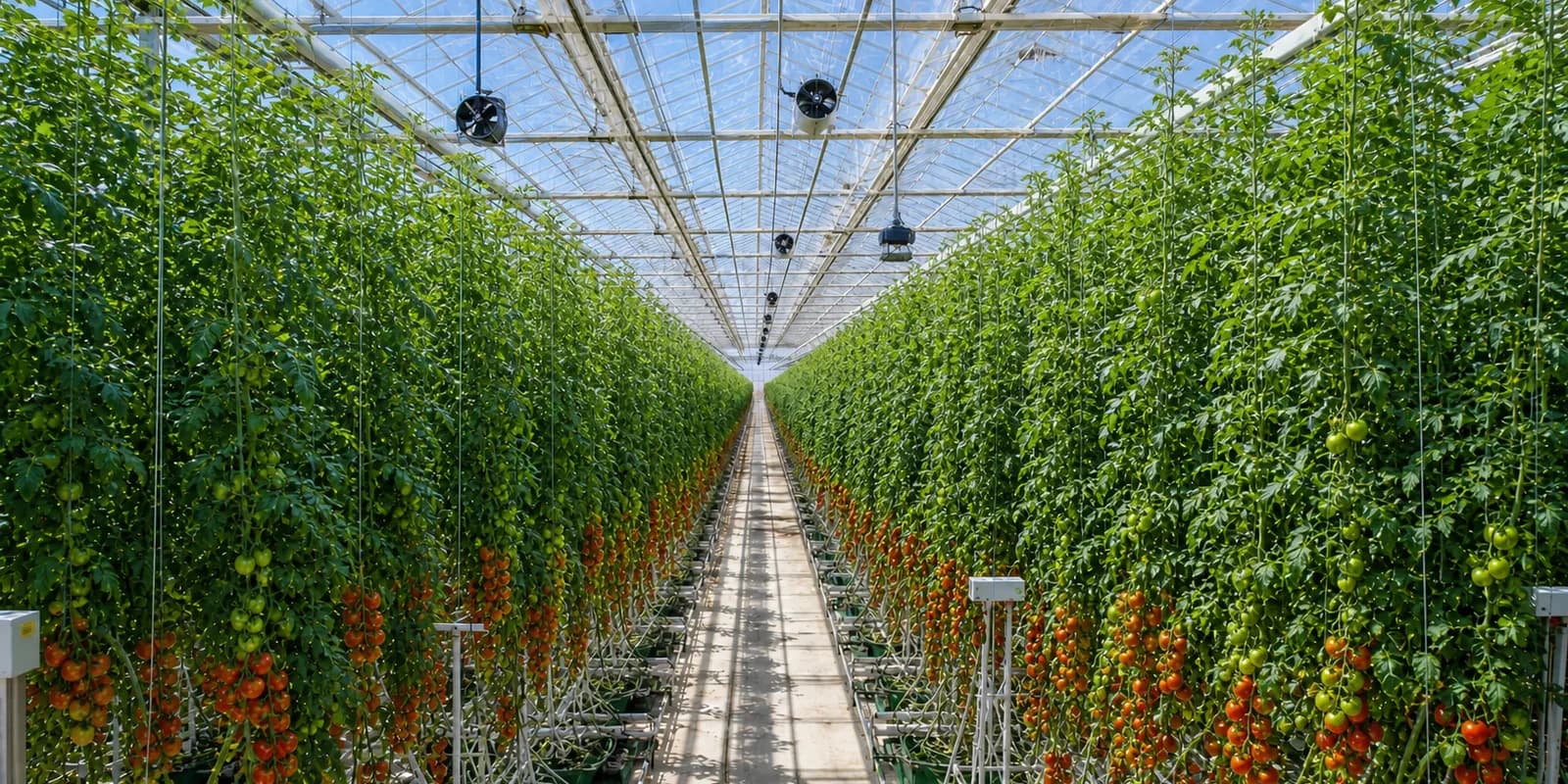
At its core, greenhouse technology refers to controlled-environment farming systems that allow crops to grow under optimised conditions, regardless of what is happening outside. Unlike traditional open-field farming, modern greenhouses are highly engineered structures that combine:
- Climate-controlled glass or poly structures
- Advanced irrigation and fertigation systems
- Sensors and automation software
- Hydroponic or soilless growing methods
- Energy optimisation and renewable integration
According to the FAO, protected agriculture systems can increase yields by 2–10 times compared to open-field farming, depending on crop and region. In water-stressed regions, this difference can be the deciding factor between profit and loss.
Why Greenhouse Technology Matters More Than Ever
Climate Instability Is Now A Business Risk
Extreme weather events are becoming more frequent. The World Meteorological Organization reports that climate-related disasters have increased fivefold over the last 50 years. For farmers, this translates into unpredictable seasons, crop failures, and unstable income. Greenhouse technology reduces exposure to these risks by creating a stable microclimate where crops are protected from heatwaves, frost, wind, and heavy rainfall.
Water Efficiency Is Critical
Agriculture uses roughly 70% of global freshwater withdrawals. Modern greenhouse systems using hydroponics and recirculation can reduce water use by 80–90% compared to conventional soil farming. This makes greenhouse technology particularly valuable in arid and semi-arid regions, where water availability limits expansion.
The Core Components Of Modern Greenhouse Technology
1. Controlled Climate Systems
Temperature, humidity, CO₂ levels, and airflow are continuously monitored and adjusted. This consistency allows plants to remain in their optimal growth range, improving yield quality and uniformity. Studies show that precise climate control can improve crop productivity by 20–35% compared to passive greenhouse systems.
2. Hydroponic Growing Systems
Hydroponics replaces soil with nutrient-rich water solutions. This approach:
- Eliminates soil-borne diseases
- Delivers nutrients directly to roots
- Allows exact control over plant nutrition
Hydroponic systems use up to 10 times less water than field-grown crops.
3. Automation, Sensors, And Data
Sensors track plant conditions in real time, feeding data into climate computers that automate irrigation, lighting, and ventilation. This reduces labour intensity while increasing precision. Data-driven greenhouse technology enables farmers to move from reactive decision-making to proactive optimisation.
4. Energy Efficiency And Renewables
Energy costs are a major concern in controlled agriculture. Modern greenhouses increasingly integrate solar power, energy storage, and efficient climate systems to reduce reliance on unstable grids and rising electricity costs. Learn: What is Hydroponics?
Greenhouse Technology And Yield Performance
One of the strongest arguments for greenhouse technology is productivity per square metre. High-tech greenhouses can produce up to 30 times more yield per square metre than open-field farming for certain crops such as tomatoes and leafy greens. This density allows farmers to:
- Produce more food on less land
- Utilise marginal or non-arable land
- Operate closer to urban markets
By shortening supply chains, produce can reach consumers within hours instead of days, improving freshness and reducing post-harvest losses.
How Drylands Farms Applies Greenhouse Technology In Practice
Drylands Farms applies greenhouse technology specifically for challenging environments where traditional farming struggles. Their approach combines modern glasshouse design, hydroponic systems, water treatment, and renewable energy to enable year-round production near local markets. Rather than relying on ideal soil or rainfall, this model focuses on precision control — producing consistent, high-quality crops while dramatically reducing water usage. The result is farming that is scalable, resilient, and economically viable even in water-scarce regions. Beyond operating farms, Drylands Farms also supports growers through feasibility studies and technical planning, helping farmers adopt greenhouse technology in a way that makes financial and operational sense.
Is Greenhouse Technology Suitable For All Farmers?
While greenhouse technology requires upfront investment, the long-term economics are compelling when designed correctly. Controlled-environment agriculture can deliver more predictable cash flow and reduced crop loss risk compared to traditional systems. Greenhouse technology is especially well-suited for:
- Farmers in drought-prone regions
- Growers targeting premium or export-quality produce
- Operations supplying local urban markets
- Investors seeking scalable, climate-resilient agriculture
The key is proper design, realistic financial modelling, and choosing the right level of technology for the target market. Also read: Farming for the Future: Redefining Agriculture
The Future Of Greenhouse Technology
The global greenhouse market is projected to exceed USD 45 billion by 2030, driven by population growth, urbanisation, and climate pressure. Advances in automation, AI-driven climate control, and renewable energy integration will continue to lower operational risk and improve returns. For farmers, greenhouse technology is no longer about experimenting with alternatives — it is about building systems that can survive and thrive in an unpredictable future.
Conclusion: Greenhouse Technology for Farming for The Future
Farming has always required resilience, but today’s challenges demand smarter tools. Greenhouse technology gives farmers control over climate, water, and productivity in ways that traditional farming cannot match. By combining efficiency, consistency, and sustainability, greenhouse technology offers a practical path forward for growers facing climate uncertainty and resource constraints. With the right planning and implementation, greenhouse technology transforms farming from a seasonal gamble into a stable, year-round operation built for the future. Looking for a smarter way to farm in a changing climate? Drylands Farms helps farmers design and implement greenhouse technology that delivers consistent yields, efficient water use, and long-term sustainability. If you’re ready to explore how greenhouse technology can work for your farm or investment project, contact us today to discuss feasibility, design, and implementation tailored to your region and goals.