How Much Water Does Hydroponics Use?
Discover how much water hydroponics uses and why it saves 80–90% of the water used in traditional farming. Learn how systems support food production.
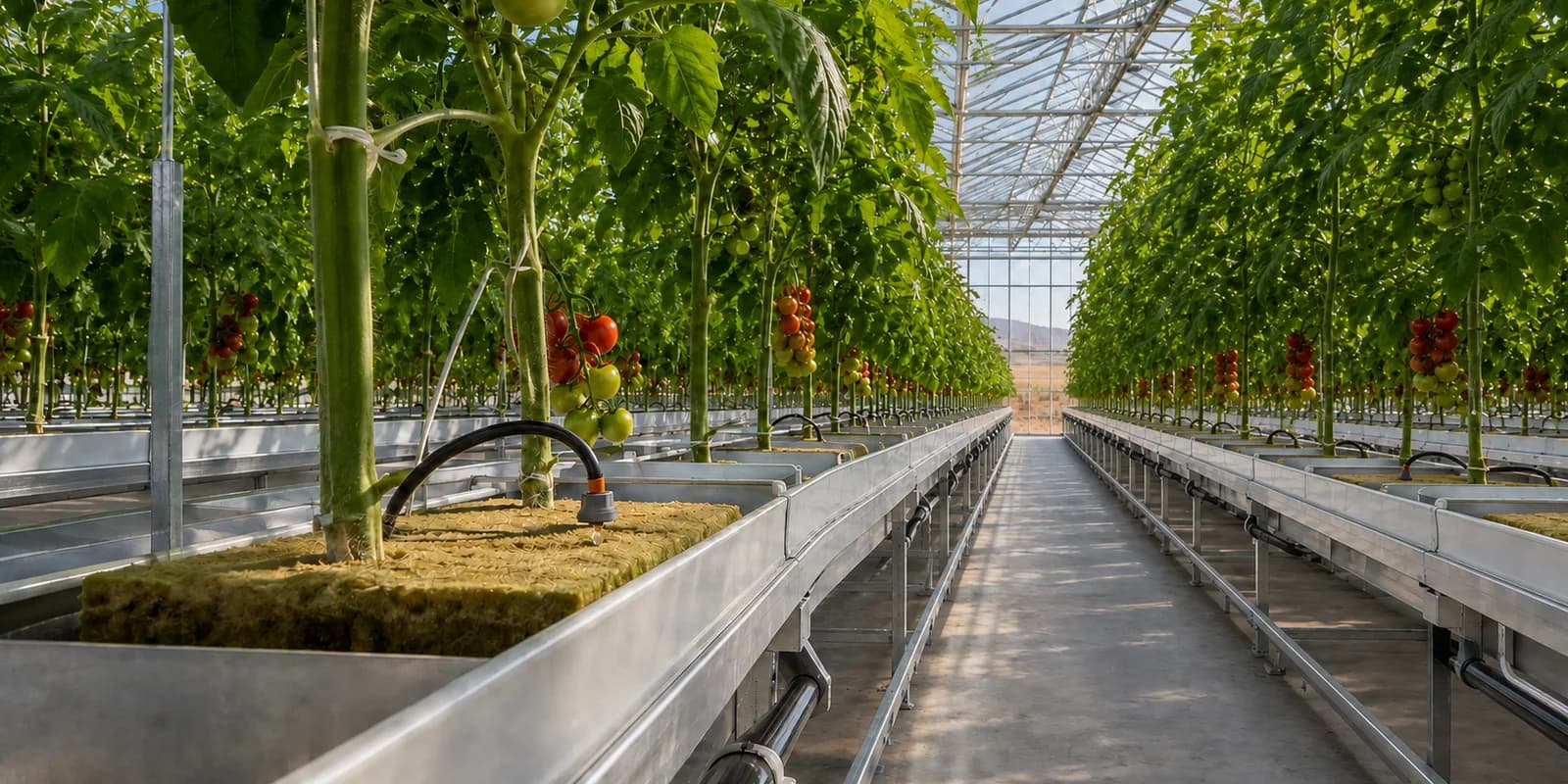
How Much Water Does Hydroponics Use?
As water scarcity intensifies globally, agriculture is under growing pressure to produce more food using fewer resources. Traditional farming relies heavily on rainfall, dams, rivers, and groundwater; however, these sources are becoming increasingly unreliable. This has led many countries, especially in emerging markets, to ask an urgent question: How can we secure food production in a world where water is running out? One of the most powerful answers lies in hydroponics, a modern farming method that grows plants without soil using nutrient-rich water. But exactly how much water does hydroponics use, and why is it considered such a game-changer for water-scarce regions?
Understanding the Importance of Water Efficiency in Agriculture
The Global Water Crisis Is Already Here
Agriculture consumes over 70% of the world’s freshwater, making it the single largest user of water worldwide. With rising temperatures, prolonged droughts, disappearing river systems, and rapidly growing populations, water scarcity is becoming one of the biggest threats to food production. Many regions simply cannot sustain large-scale open-field farming anymore. This makes efficient, controlled systems like hydroponics essential for long-term food security.
The Limits of Traditional Farming
In open-field agriculture:
- Up to 60% of water is lost to evaporation.
- Large amounts disappear through soil absorption.
- Irrigation runoff wastes water and nutrients.
- Hot, dry climates make farming unreliable.
Hydroponics solves almost all of these challenges through a closed-loop, highly controlled environment. Do you really know: What is Hydroponics?
How Hydroponics Works
Hydroponics is the science of growing plants without soil. Instead of relying on soil nutrients, plants are fed through water-based nutrient solutions delivered directly to their root systems.
Core Elements of Hydroponics:
- Water enriched with essential minerals
- Climate-controlled greenhouses
- Precision irrigation systems
- Recirculation of unused water
- No exposure to pests, soil diseases, or harsh weather
Common hydroponic systems include:
- Nutrient Film Technique (NFT)
- Deep Water Culture (DWC)
- Drip irrigation hydroponics
- Ebb and flow systems
While each system works differently, they all share one major advantage: extreme water efficiency. Still unsure? Dive deeper into learning: How Does Hydroponics Work? The Future of Farming
So, How Much Water Does Hydroponics Use?
Hydroponics uses 80–90% less water than traditional soil farming. This is one of the biggest reasons it is rapidly becoming the preferred farming method in water-scarce regions.
Why Hydroponics Uses So Little Water
1. Closed-loop recirculation
In hydroponics, water is collected, filtered, and reused—meaning the same water moves through the system repeatedly. Traditional farming loses water constantly; hydroponics keeps it inside the system.
2. Near-zero evaporation
Drylands’ climate-controlled solutions drastically reduce evaporation losses. Plants receive exactly what they need, and no water is lost into the air.
3. No soil absorption
In open fields, soil absorbs huge amounts of water before plants can use it. Hydroponics directs water straight to the roots with pinpoint accuracy.
4. No runoff or wastage
Traditional irrigation methods often result in excess water flowing away from root zones. Hydroponics eliminates this by metering water precisely.
5. Precise, plant-specific hydration
Sensors and climate computers measure plant needs in real time, adjusting water levels automatically. This prevents overwatering and reduces overall consumption.
Real-World Water Savings at Drylands
At Drylands farms:
- Hydroponic systems reuse water almost 100% of the time.
- Even saline or low-quality water can be purified and used.
- Water consumption per kg of produce is drastically lower than in open-field farming.
This makes our greenhouses highly suitable for regions suffering from drought, heat stress, or poor water quality.
Environmental Benefits of Hydroponic Water Efficiency
1. Reduced pressure on freshwater sources
Hydroponics places far less demand on dams, rivers, and groundwater—helping prevent environmental degradation and water exhaustion.
2. Ability to farm on marginal or arid land
Because soil moisture is irrelevant, hydroponics enables food production in areas previously considered unsuitable for farming.
3. Lower fertiliser waste and nutrient pollution
Hydroponics prevents nutrient runoff, which is a major cause of water pollution in open-field agriculture.
4. Higher output with fewer natural resources
Hydroponic farms can produce 6–30× more food per square metre while using minimal water—making them ideal for growing populations and limited land availability. Also read: Top 5 Advantages of Climate-Smart Agriculture
Hydroponics vs Other Agricultural Methods
Hydroponics vs Open-Field Farming
Open fields lose water to evaporation, runoff, and soil absorption. Hydroponics eliminates these losses through its closed system.
Hydroponics vs Drip Irrigation
While drip irrigation is efficient, it still loses water into the soil. Hydroponics retains and recycles everything.
Hydroponics vs Traditional Greenhouses with Soil
Even greenhouse soil systems lose water to soil absorption and evaporation. Hydroponics performs significantly better.
How Drylands Maximises Water Savings Using Hydroponics
1. Fully recirculating systems
Every drop of unused water is collected, cleaned, and reused.
2. High-tech filtration and desalination
Drylands can treat brackish or saline water, making regions with poor water sources fully viable for agriculture.
3. Climate-controlled greenhouses
Temperature, humidity, and airflow are managed to reduce stress on plants and water consumption.
4. Advanced monitoring and automation
Sensors track plant growth, water uptake, and nutrient needs. This enables precision irrigation.
5. Reliable, year-round production
Water efficiency supports consistent harvest cycles even in drought-prone areas. Hydroponics is not just water-efficient—it is future-proof.
The Role of Hydroponics in Future Food Security
Hydroponics supports food security by:
- Producing more food with fewer resources
- Ensuring a stable supply in drought conditions
- Reducing reliance on unpredictable rainfall
- Strengthening local food production
- Supporting growing populations sustainably
With water scarcity growing worse each year, hydroponics is becoming essential for countries aiming to secure their food systems long-term. Similar read: How Will Climate Change Affect Food Security
Conclusion: How Much Water Does Hydroponics Use?
So, how much water does hydroponics use? Dramatically less—80–90% less than traditional farming. By using closed-loop systems, eliminating waste, and relying on precision agriculture, hydroponics provides a sustainable, climate-resilient solution for food production. Ready to build a water-efficient, climate-smart farm? Drylands designs advanced hydroponic systems that use 80–90% less water while boosting year-round production. Contact us today to explore feasibility studies, greenhouse solutions, and sustainable farming systems built for long-term food security.